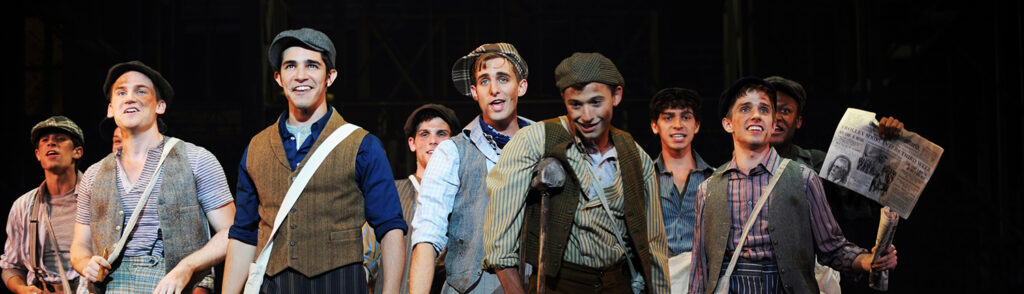
The True Story Behind Newsies: The Real 1899 Newsboys’ Strike
Were the Newsies real? Was Jack Kelly a real person? And did a group of young newspaper sellers really take on some of the most powerful publishers in New York?
Disney’s Newsies is inspired by a real event: the Newsboys’ Strike of 1899, when hundreds of young newspaper sellers in New York City went on strike against publishing giants Joseph Pulitzer and William Randolph Hearst.
The real story has all the ingredients of a great musical: determined young people, powerful opponents, a fight for fairness and a citywide movement that captured the attention of the press. But the musical adds some Broadway magic along the way.
Before you see Starlight’s Production of Disney’s Newsies at Starlight September 8–13, here’s the true story behind the headlines.
Who Were the Real “Newsies”?
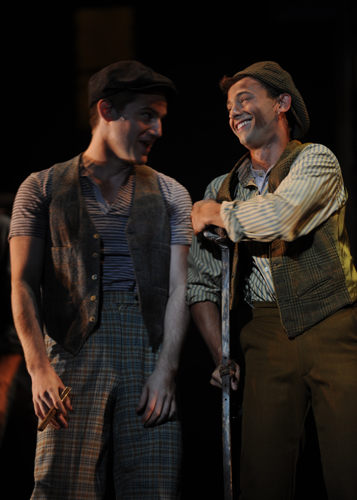
In the late 1800s, newspaper sellers were a familiar sight on the streets of New York City. Many were children and teenagers who made their living buying newspapers in bulk and selling them to people passing by.
The job wasn’t easy. Newsies typically purchased their papers upfront and then had to sell enough copies to make a profit. For young people living on their own or helping support their families, every penny mattered.
Newspapers were also booming. Publishers competed fiercely for readers, especially when major events generated exciting headlines. Newsies were an essential part of getting those papers into the hands of the public. Then, in 1899, the economics of the business changed.
What Started the Newsboys’ Strike?
During the summer of 1899, publishers raised the price newsies paid for copies of the New York World and New York Journal.
The increase was tied to the changing newspaper market following the Spanish-American War. But when the cost remained higher, the newsies found themselves having to sell more papers just to make the same amount of money.
For a young newspaper seller, that extra cost could make a big difference. The newsies decided they had had enough.
According to the Library of Congress, hundreds of New York City newsies refused to distribute the Evening World and Journal in July 1899. The strike targeted newspapers associated with two of the biggest names in American publishing: Joseph Pulitzer and William Randolph Hearst.
And these weren’t powerful businessmen with offices and lawyers. They were kids, mostly teenagers, but some as young as 8 years old.
The Newsies Take a Stand
The striking newsies organized themselves, held meetings and rallied other newspaper sellers to join their cause. They also took steps, including intimidation and scare tactics, to make sure the newspapers couldn’t simply replace them with other sellers.
The strike grew into a major event in New York City. Historic newspapers documented the newsies’ meetings and demonstrations, including a massive gathering at the New Irving Theatre on July 24, 1899.
The newsies weren’t just refusing to sell newspapers. They were demanding that the publishers recognize that the young people who distributed their papers had a voice in the business, too. That idea is at the heart of Newsies.
Was Jack Kelly a Real Person?
Here’s where the story takes a turn from history into musical theatre. Jack Kelly was not a real person.
The charismatic Jack Kelly at the center of Newsies is a fictional character created for the Disney film and later musical. However, he was inspired by real newsies who helped lead the 1899 strike.
One of the most notable real-life leaders was a young man known as Kid Blink, who became one of the voices of the newsies’ movement. He was called Kid Blink because he was reportedly blind in one eye. Other real newsies inspired characters and names that appear in Newsies, including Racetrack Higgins and Mush Meyers.
Did you know? One of the real leaders of the 1899 Newsboys’ Strike was Louis “Kid Blink” Ballatt, a teenage newsie who was reportedly blind in one eye. His nickname came from his distinctive appearance, and he became one of the most recognizable voices of the strike.
While you won’t find a historical Jack Kelly leading the strike, the spirit behind him came from real young people who stood up and organized when they believed they were being treated unfairly.
What About Katherine Plumber?
Katherine Plumber is another character created for the musical. She’s a fictional young reporter who becomes an ally of the newsies and helps bring their story to a wider audience.
Her character doesn’t represent one specific historical person. In fact, the real strike had plenty of journalists and newspapers covering the newsies’ actions, but Katherine’s role was created to give the musical a strong journalist character and a personal connection to Jack.
Did the Newsies Actually Win?
This is one of the most important differences between history and the musical. The real strike did not end with the newsies completely defeating Pulitzer and Hearst.
Instead, the publishers eventually reached a compromise with the striking newsies. After weeks of striking, the publishers agreed to buy back unsold newspapers from the newsies. That meant young sellers would no longer have to absorb the full financial loss when they couldn’t sell every copy.
The agreement didn’t transform the news business overnight, but it represented a meaningful victory for the newsies. Perhaps more importantly, the strike demonstrated what could happen when a group of young workers organized and refused to be ignored.
Did Girls Really Work as Newsies?
Yes, there were girl “newsies.” Although Newsies has traditionally focused on a mostly male group of newspaper sellers, girls and young women also worked as news sellers during this period.
The Library of Congress has documented photographs and historical newspaper material related to newsies, providing a fascinating glimpse into the young people who worked in this industry around the turn of the 20th century.
The historical record is a reminder that the real world behind Newsies was bigger and more complicated than the musical’s central cast.
From Real-Life Strike to Disney Musical
How did a turn-of-the-century labor dispute become a musical? The story first inspired the 1992 Disney film Newsies, starring Christian Bale as Jack Kelly. Decades later, the story made its way to the stage, becoming a Broadway musical with music by Alan Menken, lyrics by Jack Feldman and a story by Harvey Fierstein.
The stage version expanded the story and transformed the newsies’ fight into a high-energy musical filled with big dance numbers, memorable songs and a message about standing together.
Songs such as “Carrying the Banner” and “Seize the Day” turn the energy of the real strike into something audiences can experience from their seats. That’s the magic of Newsies: The headlines may be more than a century old, but the story still feels remarkably current.
The real newsies were young, working-class New Yorkers who realized that standing together could make it much harder for powerful people to ignore them. That’s what makes their story so compelling more than 125 years later.
The musical turns that history into an unforgettable theatrical experience, complete with soaring music, athletic choreography, and a cast of young characters who refuse to back down.
See the Story Come to Life at Starlight
Starlight’s production of Disney’s Newsies comes to the stage September 8–13, 2026.
Set in turn-of-the-century New York City and inspired by the real Newsboys’ Strike of 1899, Newsies follows Jack Kelly and his fellow newsies as they fight back against unfair conditions and demand to be heard.
Starlight’s production will feature national talent alongside Kansas City performers, plus 33 high school students in the Blue Star Awards ensemble. See the full cast.
Seize the day and see Disney’s Newsies at Starlight September 8–13.
Frequently Asked Questions
Yes. Disney’s Newsies was inspired by the real Newsboys’ Strike of 1899, when hundreds of young newspaper sellers in New York City went on strike against publishers Joseph Pulitzer and William Randolph Hearst. However, characters including Jack Kelly and Katherine Plumber are fictional, created for the film and musical.
Tickets are available online, by phone at 816-363-7827, or in person at the Ticket Office located at 4600 Starlight Road, Kansas City, Mo., 64132. Be sure to check Ticket Office hours before you visit.
Performances will begin at 7:30 p.m. which is earlier than most Broadway shows at Starlight.
We recognize that not every production or artistic choice will meet the expectations of every audience member. As you consider attending performances at Starlight, please use the information on the Content Transparency page to learn more.